

1. Project Overview
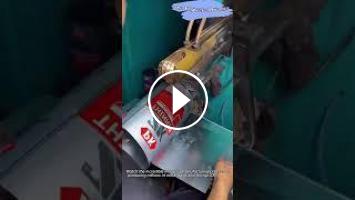
This project showcases the high-volume industrial manufacturing and mass production workflow of fabricating heavy-duty steel containers utilized globally for chemical storage, thinners, and paints. By integrating heavy-duty automatic metal stamping systems, high-frequency linear seam welders, and synchronized multi-axis rotary capping machinery, the manufacturing plant transforms flat, raw tin-coated steel sheets into airtight, structurally sound commercial storage canisters.
2. Materials and Tools Used
- Tin-Coated Carbon Steel Sheets / Pre-printed raw metal blanks
- Industrial High-Pressure Mechanical Power Press & Custom Forming Dies (for tops and bottoms)
- High-Frequency Electric Resistance Seam Welder (with continuous copper alloy wheel electrodes)
- Automated Multi-Station Rotary Sealing and Crimping Machine
- Pneumatic Liquid Filling Lines & Hydrostatic Pressure Testing Baths
- Personal Protective Equipment (heavy-duty work gloves, ear protection, safety glasses, and steel-toe boots)
3. Step-by-Step Procedure
1. Feed pre-printed or raw tin-coated steel sheets into a high-speed roller shear to cut the substrate into accurate rectangular body blanks.
2. Form the circular lid components and bottom bases simultaneously by loading heavy sheet metal into a separate high-pressure mechanical stamping press.
3. Roll the rectangular body blanks into cylindrical forms, then feed them into a high-frequency resistance seam welder where rotary copper wheels fuse the edges continuously.
4. Transport the welded cylindrical hulls to an automated flanging station to flare both ends, then mechanically crimp and seal the stamped bottom plates onto the body.
5. Convey the completed canisters to the fluid processing bay, where pneumatic filling nozzles inject uniform volumes of paint or chemical thinner into each unit.
6. The sub-assembly advances to the rotary capping station, where lids are automatically pressed and double-seamed under mechanical pressure, followed by a water-submersion test to ensure no leakage before bulk bundling.
4. Importance of the Task
Containers utilized for hazardous volatile liquids, such as paints and chemical thinners, demand exceptional structural integrity and flawless air-tight seams to prevent dangerous evaporation, leakage, or external contamination during long-distance maritime shipment. Relying on manual folding or soldering is inadequate for maintaining standard industrial parameters and uniform seal margins. Implementing this integrated automated stamping and welding matrix guarantees flawless structural symmetry and absolute seal reliability, reducing packaging reject metrics and maximizing plant throughput to fulfill global wholesale quotas safely.
5. Guideline Compliance and Educational Purpose
This video features high-risk industrial fabrication sequences, including high-tonnage mechanical stamping presses, exposed high-frequency electrical welding elements, and the mechanized handling of flammable chemical liquids within a manufacturing environment. The content has been produced strictly for "educational and informational purposes" to explain automated mechanical systems, material transformation logic, and commercial packaging safety traditions to a global audience. In institutional manufacturing plants, these production lines are strictly equipped with active exhaust ventilation systems, physical guard barriers, and synchronized dual-button safety triggers to ensure total compliance with vocational health and safety regulations.
This project showcases the high-volume industrial manufacturing and mass production workflow of fabricating heavy-duty steel containers utilized globally for chemical storage, thinners, and paints. By integrating heavy-duty automatic metal stamping systems, high-frequency linear seam welders, and synchronized multi-axis rotary capping machinery, the manufacturing plant transforms flat, raw tin-coated steel sheets into airtight, structurally sound commercial storage canisters.
2. Materials and Tools Used
- Tin-Coated Carbon Steel Sheets / Pre-printed raw metal blanks
- Industrial High-Pressure Mechanical Power Press & Custom Forming Dies (for tops and bottoms)
- High-Frequency Electric Resistance Seam Welder (with continuous copper alloy wheel electrodes)
- Automated Multi-Station Rotary Sealing and Crimping Machine
- Pneumatic Liquid Filling Lines & Hydrostatic Pressure Testing Baths
- Personal Protective Equipment (heavy-duty work gloves, ear protection, safety glasses, and steel-toe boots)
3. Step-by-Step Procedure
1. Feed pre-printed or raw tin-coated steel sheets into a high-speed roller shear to cut the substrate into accurate rectangular body blanks.
2. Form the circular lid components and bottom bases simultaneously by loading heavy sheet metal into a separate high-pressure mechanical stamping press.
3. Roll the rectangular body blanks into cylindrical forms, then feed them into a high-frequency resistance seam welder where rotary copper wheels fuse the edges continuously.
4. Transport the welded cylindrical hulls to an automated flanging station to flare both ends, then mechanically crimp and seal the stamped bottom plates onto the body.
5. Convey the completed canisters to the fluid processing bay, where pneumatic filling nozzles inject uniform volumes of paint or chemical thinner into each unit.
6. The sub-assembly advances to the rotary capping station, where lids are automatically pressed and double-seamed under mechanical pressure, followed by a water-submersion test to ensure no leakage before bulk bundling.
4. Importance of the Task
Containers utilized for hazardous volatile liquids, such as paints and chemical thinners, demand exceptional structural integrity and flawless air-tight seams to prevent dangerous evaporation, leakage, or external contamination during long-distance maritime shipment. Relying on manual folding or soldering is inadequate for maintaining standard industrial parameters and uniform seal margins. Implementing this integrated automated stamping and welding matrix guarantees flawless structural symmetry and absolute seal reliability, reducing packaging reject metrics and maximizing plant throughput to fulfill global wholesale quotas safely.
5. Guideline Compliance and Educational Purpose
This video features high-risk industrial fabrication sequences, including high-tonnage mechanical stamping presses, exposed high-frequency electrical welding elements, and the mechanized handling of flammable chemical liquids within a manufacturing environment. The content has been produced strictly for "educational and informational purposes" to explain automated mechanical systems, material transformation logic, and commercial packaging safety traditions to a global audience. In institutional manufacturing plants, these production lines are strictly equipped with active exhaust ventilation systems, physical guard barriers, and synchronized dual-button safety triggers to ensure total compliance with vocational health and safety regulations.
- Категория
- YouTube и Shorts

Комментариев нет.
Следующее
Auto
-
00:36

Equipment model XD-80, weldable materials: carbon steel / stainless steel / titanium alloy, etc.
-
00:04
Inside an Automated Toothpaste Packaging Machine | High-Speed Factory Automation
-
11:07
Best High Compression Golf Balls For 2026 - Top High-Compression and Fast Swing Speed Picks
-
00:08
Automatic Glass Bottle Liquid Filling Process #worker #process #automation #bottling #packaging
-
00:07
Automated Machinery Manufacturing Playing Cards at High Speed #cardgame #boardgames #industry
-
00:39
KEPUNI orbital welding equipment easily takes on carbon steel elbows and industrial pipes
-
00:06
Amazing Metal Roofing Press Machine | Galvalume Roof Panel Forming Process
-
00:22
Equipment model XD-80, weldable materials: carbon steel / stainless steel / titanium alloy, etc.
-
00:04
How Heavy-Duty Steel Grating Is Manufactured | Amazing Industrial Mesh Production Process
-
00:44
Signal Hound SM200 Design: Achieving 1 THz/s Sweep Speed #tech #engineering #1THz #sweep #speed
-
05:33

ЗАРАБОТОК В ИНТЕРНЕТЕ | КРУТАЯ СХЕМА | FUNPAY
-
08:12

Пассивный Заработок 1000Р в День в Интернете на Телефоне Без Вложений
-
06:43

Как ЗАРАБОТАТЬ ШКОЛЬНИКУ в ИНТЕРНЕТЕ? Самые Легкие Способы Заработка
-
07:05

ЗАРАБОТОК В ИНТЕРНЕТЕ 2023 | Реальный заработок в интернете с вложением | Как заработать в интернете
-
05:49

ЗАРАБОТОК В ИНТЕРНЕТЕ 2023 | Реальный Заработок В Интернете С Вложением. Как Заработать В Интернете?
-
04:28

Схема заработка 2023 ! Зарабатываем в интернете онлайн сидя дома ! Заработок денег ! Деньги легко !
-
05:33

ЗАРАБОТОК В ИНТЕРНЕТЕ | КРУТАЯ СХЕМА | FUNPAY
-
06:43

Как ЗАРАБОТАТЬ ШКОЛЬНИКУ в ИНТЕРНЕТЕ? Самые Легкие Способы Заработка
-
14:53

Показываю Как Зарабатывать Деньги - Заработок В Интернете 2023 Рабочая Схема Для Заработка
-
14:12

Большой Заработок В Интернете С Выводом Рабочая Схема Заработка
 Загрузка...