

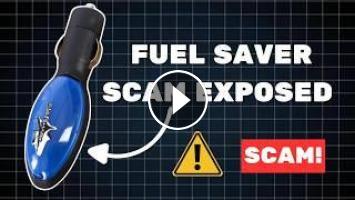
NeoSocket Fuel Saver and Fuel Shark are marketed as simple plug-in devices that supposedly help your vehicle consume less fuel. But when you look past the advertising and examine how a real car engine actually controls fuel consumption, a serious problem appears: the hardware being sold does not have a credible mechanism for delivering the fuel savings being promised.
In this Scam IQ investigation, we examine NeoSocket and Fuel Shark because, despite the different branding, the devices appear to follow essentially the same concept. They are small electronic gadgets promoted as fuel-saving technology, while versions of the same basic product have been sold under multiple names for years.
The important question is not whether the device lights up when plugged in. The question is whether it can actually change the way your engine burns fuel.
A modern internal-combustion vehicle controls fuel delivery through systems involving the engine computer, fuel injectors, oxygen sensors, air-flow and pressure measurements, throttle position, ignition timing and other operating parameters. Fuel economy depends on how efficiently the engine converts the chemical energy in fuel into mechanical power—and on how the vehicle manages factors such as load, speed, air resistance and combustion.
The NeoSocket and Fuel Shark devices examined in this investigation do not provide a credible connection to those systems. In fact, the internal circuitry we examined is extremely basic, consisting of components such as a capacitor, resistors and an LED. That may allow the product to perform a simple electrical function, but it does not establish a mechanism capable of substantially reducing gasoline or diesel consumption.
That makes the advertising especially concerning. These products have been promoted through social media advertising, including Facebook, with messaging designed to make a cheap plug-in gadget sound like a breakthrough fuel-saving technology.
The same basic devices can also be found through Chinese wholesale marketplaces for a tiny fraction of the retail price. Low manufacturing cost alone does not prove fraud, but when an inexpensive generic device is repeatedly rebranded and accompanied by dramatic fuel-saving claims that its hardware cannot realistically deliver, that becomes a major consumer warning sign.
And this is not a new type of claim. Regulators have previously challenged marketers of fuel-saving devices for making unsupported promises about dramatically improving fuel economy.
Scam IQ verdict: NeoSocket and Fuel Shark appear to be two versions of the same questionable fuel-saver concept. Based on the devices' basic construction, the lack of a credible pathway to control engine fuel delivery or combustion, and the unsupported claims surrounding them, there is no convincing engineering basis to believe these gadgets can deliver the fuel savings advertised.
I'm TJ, and this is Scam IQ — we investigate the claims so you don't have to.
#scam iq
TAGS:
NeoSocket fuel saver, Fuel Shark, Fuel Shark scam, NeoSocket scam, NeoSocket Fuel Saver scam, Fuel Shark fuel saver scam, fuel saving device, gas saving device, fuel saver scam, car fuel saver, fake fuel saver, fuel economy scam, automotive scam, Scam IQ
In this Scam IQ investigation, we examine NeoSocket and Fuel Shark because, despite the different branding, the devices appear to follow essentially the same concept. They are small electronic gadgets promoted as fuel-saving technology, while versions of the same basic product have been sold under multiple names for years.
The important question is not whether the device lights up when plugged in. The question is whether it can actually change the way your engine burns fuel.
A modern internal-combustion vehicle controls fuel delivery through systems involving the engine computer, fuel injectors, oxygen sensors, air-flow and pressure measurements, throttle position, ignition timing and other operating parameters. Fuel economy depends on how efficiently the engine converts the chemical energy in fuel into mechanical power—and on how the vehicle manages factors such as load, speed, air resistance and combustion.
The NeoSocket and Fuel Shark devices examined in this investigation do not provide a credible connection to those systems. In fact, the internal circuitry we examined is extremely basic, consisting of components such as a capacitor, resistors and an LED. That may allow the product to perform a simple electrical function, but it does not establish a mechanism capable of substantially reducing gasoline or diesel consumption.
That makes the advertising especially concerning. These products have been promoted through social media advertising, including Facebook, with messaging designed to make a cheap plug-in gadget sound like a breakthrough fuel-saving technology.
The same basic devices can also be found through Chinese wholesale marketplaces for a tiny fraction of the retail price. Low manufacturing cost alone does not prove fraud, but when an inexpensive generic device is repeatedly rebranded and accompanied by dramatic fuel-saving claims that its hardware cannot realistically deliver, that becomes a major consumer warning sign.
And this is not a new type of claim. Regulators have previously challenged marketers of fuel-saving devices for making unsupported promises about dramatically improving fuel economy.
Scam IQ verdict: NeoSocket and Fuel Shark appear to be two versions of the same questionable fuel-saver concept. Based on the devices' basic construction, the lack of a credible pathway to control engine fuel delivery or combustion, and the unsupported claims surrounding them, there is no convincing engineering basis to believe these gadgets can deliver the fuel savings advertised.
I'm TJ, and this is Scam IQ — we investigate the claims so you don't have to.
#scam iq
TAGS:
NeoSocket fuel saver, Fuel Shark, Fuel Shark scam, NeoSocket scam, NeoSocket Fuel Saver scam, Fuel Shark fuel saver scam, fuel saving device, gas saving device, fuel saver scam, car fuel saver, fake fuel saver, fuel economy scam, automotive scam, Scam IQ
- Категория
- Схемы по заработку в интернете

Комментариев нет.
Следующее
Auto
-
01:06

Is AI video editing actually a time saver? Let's break down the reality.
-
09:12
The Top 5 Best Space Saver Vacuum Storage Bags in 2026 - Must Watch Before Buying!
-
01:39
QuickStockUp Mascara Review 2026 - SCAM or LEGIT??
-
37:40
Heart of Darkness Unveiled: The Congo River’s Dark Secrets Exposed(Review)
-
02:50
YouTube Automation 2026: Sab Se Bara Scam Exposed!
-
01:07
Sylaza Review 2026 - Scam OR legit??
-
16:00
Best Prepared Meals Delivery Service - Factor vs Fuel Meals vs CookUnity
-
48:20
This Gold Pullback Creates the Necessary Fuel a Much Bigger Move Higher | Peter Carlin.
-
02:59
Shop Table, Fuel System Routing
-
01:05
Broker Scam - High Spread #cryptobroker #scam
-
05:33

ЗАРАБОТОК В ИНТЕРНЕТЕ | КРУТАЯ СХЕМА | FUNPAY
-
08:12

Пассивный Заработок 1000Р в День в Интернете на Телефоне Без Вложений
-
06:43

Как ЗАРАБОТАТЬ ШКОЛЬНИКУ в ИНТЕРНЕТЕ? Самые Легкие Способы Заработка
-
07:05

ЗАРАБОТОК В ИНТЕРНЕТЕ 2023 | Реальный заработок в интернете с вложением | Как заработать в интернете
-
05:49

ЗАРАБОТОК В ИНТЕРНЕТЕ 2023 | Реальный Заработок В Интернете С Вложением. Как Заработать В Интернете?
-
04:28

Схема заработка 2023 ! Зарабатываем в интернете онлайн сидя дома ! Заработок денег ! Деньги легко !
-
05:33

ЗАРАБОТОК В ИНТЕРНЕТЕ | КРУТАЯ СХЕМА | FUNPAY
-
06:43

Как ЗАРАБОТАТЬ ШКОЛЬНИКУ в ИНТЕРНЕТЕ? Самые Легкие Способы Заработка
-
14:53

Показываю Как Зарабатывать Деньги - Заработок В Интернете 2023 Рабочая Схема Для Заработка
-
14:12

Большой Заработок В Интернете С Выводом Рабочая Схема Заработка
 Загрузка...