

First it was prompt engineering. Now people are talking about graph engineering. But what does that actually mean?
Peter Steinberger, the creator of OpenClaw, tweeted, “Are we still talking loops or did we shift to graphs yet?”
And the team behind LangGraph published a whole breakdown. So let me explain.
With prompting, you might say, “Write this code.” Then you check it, find a mistake, and ask it to try again.
With graph engineering, you build those steps and decisions into the system.
So imagine an AI that writes code, runs the tests, and checks the results.
If a test fails, the workflow sends the code back for another attempt. If everything passes, it comes to you for approval.
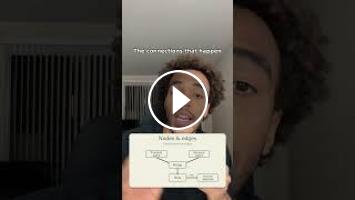
Each step is called a node. The connections that determine what happens next are edges. And the information carried through the workflow, like the code and test results, is its state.
A step can run regular code, call an AI model, or even run an entire agent.
Basically, you’re building a flowchart your system actually executes. You decide where AI gets flexibility and where specific rules must be followed.
And yes, that graph can include loops. You can also branch into different paths or run work in parallel.
But two things to watch out for.
First, give retries a limit so a failing task doesn’t keep burning tokens.
Second, don’t force every task into a rigid workflow. Sometimes the agent needs room to figure out the steps.
https://drive.google.com/file/d/1Sr-YNL7FecmuH6BFK1nnH7ng9YjVn_jl/view?usp=sharing
Peter Steinberger, the creator of OpenClaw, tweeted, “Are we still talking loops or did we shift to graphs yet?”
And the team behind LangGraph published a whole breakdown. So let me explain.
With prompting, you might say, “Write this code.” Then you check it, find a mistake, and ask it to try again.
With graph engineering, you build those steps and decisions into the system.
So imagine an AI that writes code, runs the tests, and checks the results.
If a test fails, the workflow sends the code back for another attempt. If everything passes, it comes to you for approval.
Each step is called a node. The connections that determine what happens next are edges. And the information carried through the workflow, like the code and test results, is its state.
A step can run regular code, call an AI model, or even run an entire agent.
Basically, you’re building a flowchart your system actually executes. You decide where AI gets flexibility and where specific rules must be followed.
And yes, that graph can include loops. You can also branch into different paths or run work in parallel.
But two things to watch out for.
First, give retries a limit so a failing task doesn’t keep burning tokens.
Second, don’t force every task into a rigid workflow. Sometimes the agent needs room to figure out the steps.
https://drive.google.com/file/d/1Sr-YNL7FecmuH6BFK1nnH7ng9YjVn_jl/view?usp=sharing
- Категория
- Схемы по заработку в интернете

Комментариев нет.
Следующее
Auto
-
21:31

You Can Learn Loop VS Graph Engineering In 21 Min | AI Agent System Design, Harness, Nodes, Edges
-
00:04
Precision Engine Block Assembly Process! #Engineering #Factory #Machines
-
34:24
I'm a Senior Google AI PM. Here's How I Build Loops (Finally, Loop Engineering Explained)
-
00:44
Signal Hound SM200 Design: Achieving 1 THz/s Sweep Speed #tech #engineering #1THz #sweep #speed
-
01:50
2.2.7 Identify Social Engineering
-
34:15
Harness Engineering Deep Dive
-
35:48
Graph Engineering: ХАЙП или РЕВОЛЮЦИЯ в AI ? Полный разбор 2026
-
01:27
Don't Solve This CAT Question — Draw It | Modulus Graph Trick #shorts
-
02:30
Normal day of a work from home software engineer #workfromhome #softwareengineer #developerlife
-
01:20
Your job can grow your career. Your side projects can create opportunities. #softwareengineer
-
05:33

ЗАРАБОТОК В ИНТЕРНЕТЕ | КРУТАЯ СХЕМА | FUNPAY
-
08:12

Пассивный Заработок 1000Р в День в Интернете на Телефоне Без Вложений
-
06:43

Как ЗАРАБОТАТЬ ШКОЛЬНИКУ в ИНТЕРНЕТЕ? Самые Легкие Способы Заработка
-
07:05

ЗАРАБОТОК В ИНТЕРНЕТЕ 2023 | Реальный заработок в интернете с вложением | Как заработать в интернете
-
05:49

ЗАРАБОТОК В ИНТЕРНЕТЕ 2023 | Реальный Заработок В Интернете С Вложением. Как Заработать В Интернете?
-
04:28

Схема заработка 2023 ! Зарабатываем в интернете онлайн сидя дома ! Заработок денег ! Деньги легко !
-
05:33

ЗАРАБОТОК В ИНТЕРНЕТЕ | КРУТАЯ СХЕМА | FUNPAY
-
06:43

Как ЗАРАБОТАТЬ ШКОЛЬНИКУ в ИНТЕРНЕТЕ? Самые Легкие Способы Заработка
-
14:53

Показываю Как Зарабатывать Деньги - Заработок В Интернете 2023 Рабочая Схема Для Заработка
-
14:12

Большой Заработок В Интернете С Выводом Рабочая Схема Заработка
 Загрузка...